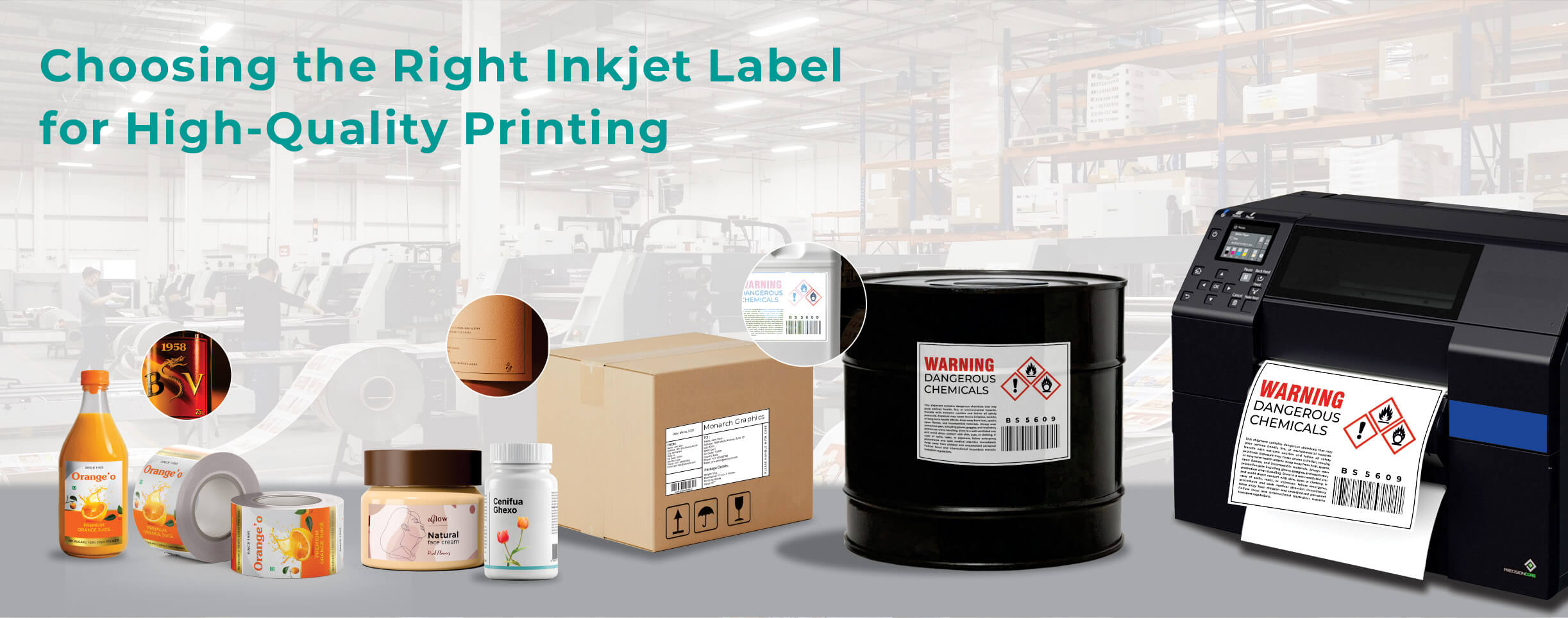
 The demand for high-resolution, customizable labels is higher than ever. Whether for retail, pharmaceuticals, e-commerce, or industrial applications, businesses need vibrant, precise, and durable labels that elevate their branding and meet regulatory requirements.
Inkjet label printing has transformed how businesses handle short-run and on-demand label production, offering exceptional image clarity, faster turnaround times, and cost efficiency. But selecting the right inkjet label requires careful consideration of materials, ink compatibility, and durability.
If you're looking to upgrade your label quality or set up in-house inkjet printing, this guide covers everything you need to know.

What Are Inkjet Labels?
Inkjet labels are digitally printed using precision inkjet technology to create sharp text, vivid colors, and intricate details. Unlike traditional label printing, inkjet allows for customization, shorter print runs, and superior image quality without plate costs.
These labels are widely used in:
-
Retail & FMCG Packaging – High-quality product branding for food, beverages, cosmetics, and personal care.
-
Pharmaceutical & Healthcare – Smudge-resistant, durable labels for compliance with medical regulations.
-
E-Commerce & Logistics – Barcode, QR code, and shipping labels with high contrast and readability.
-
Industrial & Chemical Labeling – Waterproof, long-lasting labels for hazardous materials and extreme conditions.

Key Factors to Consider When Choosing the Right Inkjet Label
1. Label Material Selection
Different label materials affect print clarity, durability, and adhesive performance. Common options include:
-
Matte Paper Labels – Premium non-reflective finish for a modern, high-end look.
-
Glossy Paper Labels – Boosts color vibrancy and ensures rich contrast.
-
Synthetic Labels (Polypropylene & Polyester) – Water-resistant and highly durable for chemical, industrial, and outdoor applications.

2. Ink Technology & Durability
Inkjet labels use advanced pigment-based inks that offer higher durability than dye-based inks.
-
Pigment-based inks – Water-resistant, smudge-proof, and UV-stable, ideal for long-term labeling applications.
-
Dye-based inks – Brighter colors but prone to fading under sunlight and exposure to moisture.

3. Print Resolution & Speed
Inkjet printing offers variable droplet sizes with up to 1200 dpi resolution, ensuring:
-
Fine details and smooth gradients for premium product labels.
-
High-speed production (up to 119mm/sec) for bulk printing without compromising quality.

Benefits of Inkjet Labels Over Traditional Printing
Instant Customization – Ideal for variable data printing and small batch production.
Superior Print Quality – Crisp text, high-definition graphics, and sharp barcodes.
Faster Turnaround – Print on demand without third-party delays.
Eco-Friendly & Cost-Effective – Less ink waste compared to flexo or thermal printing.
Conclusion
Selecting the right inkjet label depends on print quality, durability, adhesive needs, and material compatibility.
Looking to bring inkjet label printing in-house? Monarch Graphics provides the full setup—printers, consumables, and expert consultation.
Need professionally printed inkjet labels? Order high-resolution labels directly from us!
Connect with Monarch Graphics today to discuss your inkjet label needs!